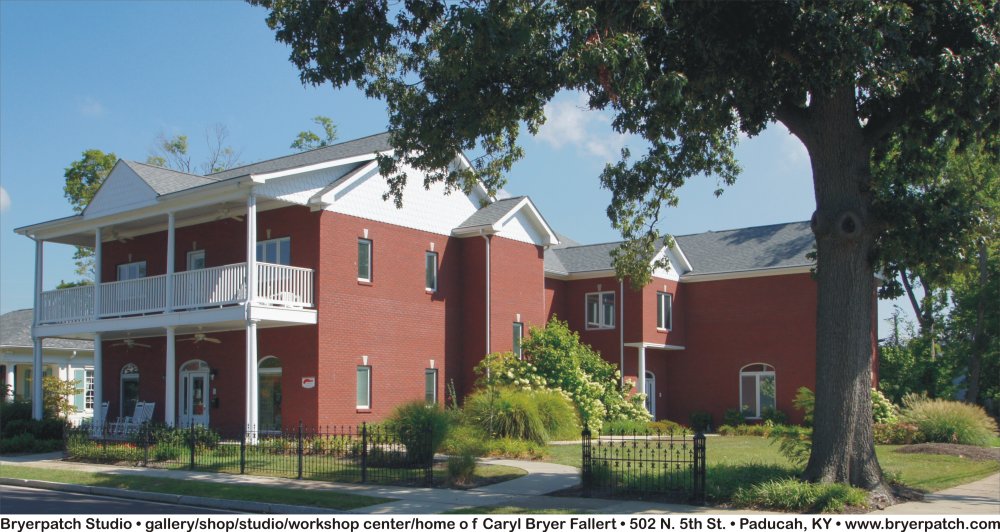
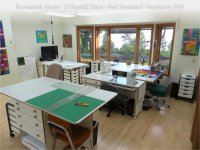
In 2005 I moved from Chicago to Paducah, KY and built an 8000 square foot building in the historic LowerTown Arts district. I was able to build exactly what I wanted and ultimately had the studio of my dreams. In June of 2014, we left Paducah and now live in Port Townsend, WA, where my studio is very functional, but half this size. Click here for more pictures of the new studio.
Shortly before I left Paducah I was asked to write a magazine article about my dream studio, and therefore took lots of detailed photos. Below you will find many of the ideas I incorporated into my work space. I hope you find them interesting and useful in planning your own quilting studio.
Often the hardest task in any creative project is knowing
what you want. For many years I fantasized about having a
place where students could come to my studio to take classes,
and where I could surround myself with creative people. When
I built this building, I was lucky enough to be able to build
exactly what I wanted. I knew that I needed solitude for my
own creative process, so I put my personal design and sewing
studio on the second floor, and the shop, shipping department,
and classroom on the first floor, so I could continue working
when others were using my first floor spaces. This building
was far larger than I needed for just myself. I designed it so
it could be filled with creative people, and I'm thrilled to say
that it often was. |
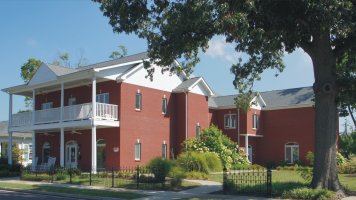
Old Studio
502 N. 5th St. • Paducah KY |
 |
New Studio
Port Townsend, WA |
 |
|
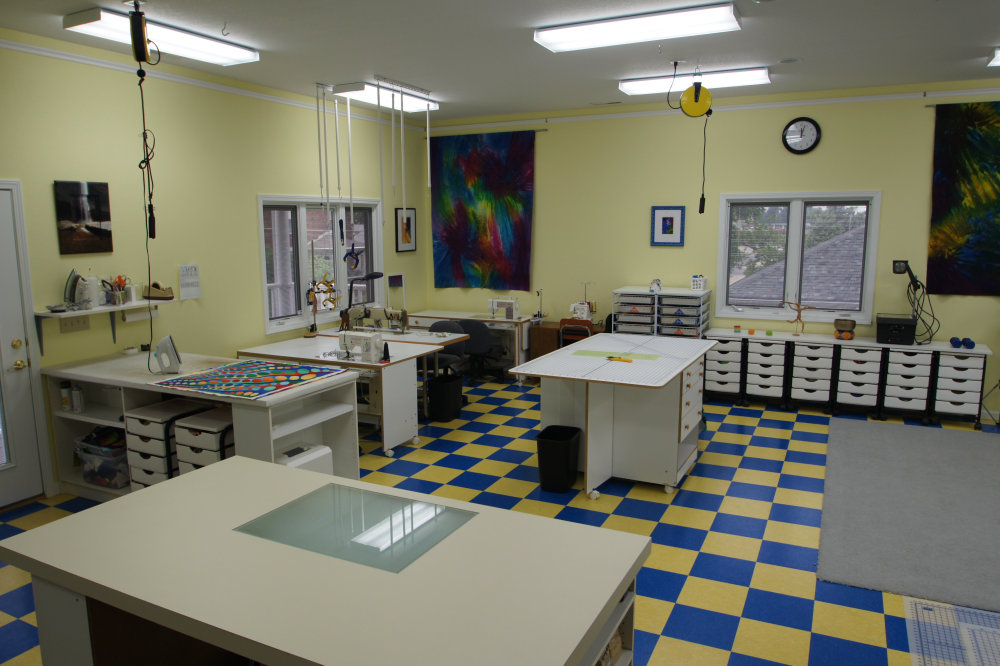
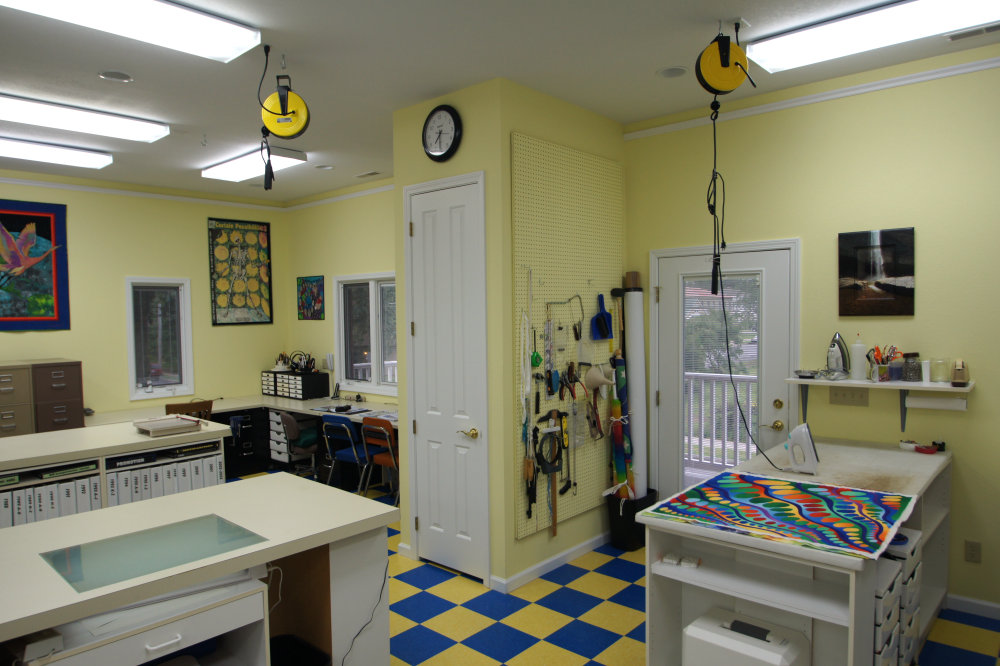
My studio was designed to promote creativity and positive
energy. The art and objects I chose to bring into my space
were intentionally uplifting and inspiring. |
| Click on any image for a larger picture. |
|
|
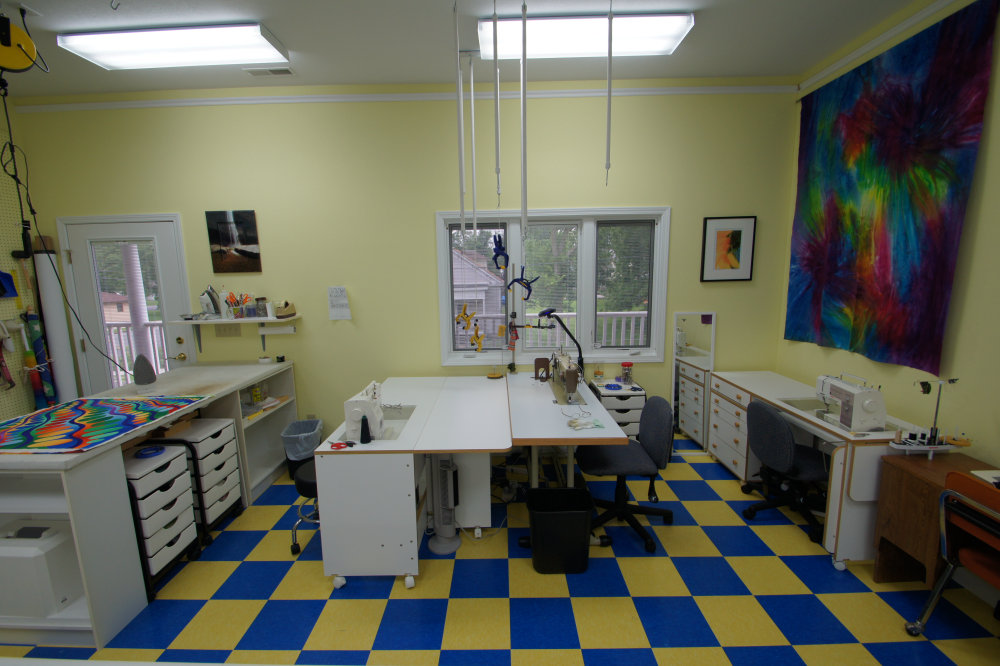
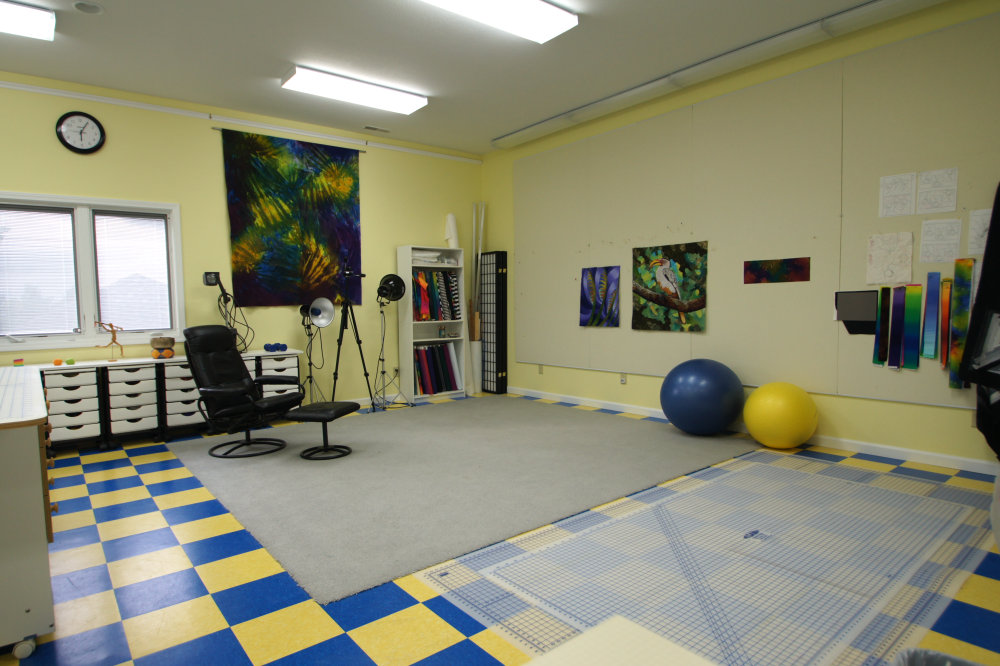
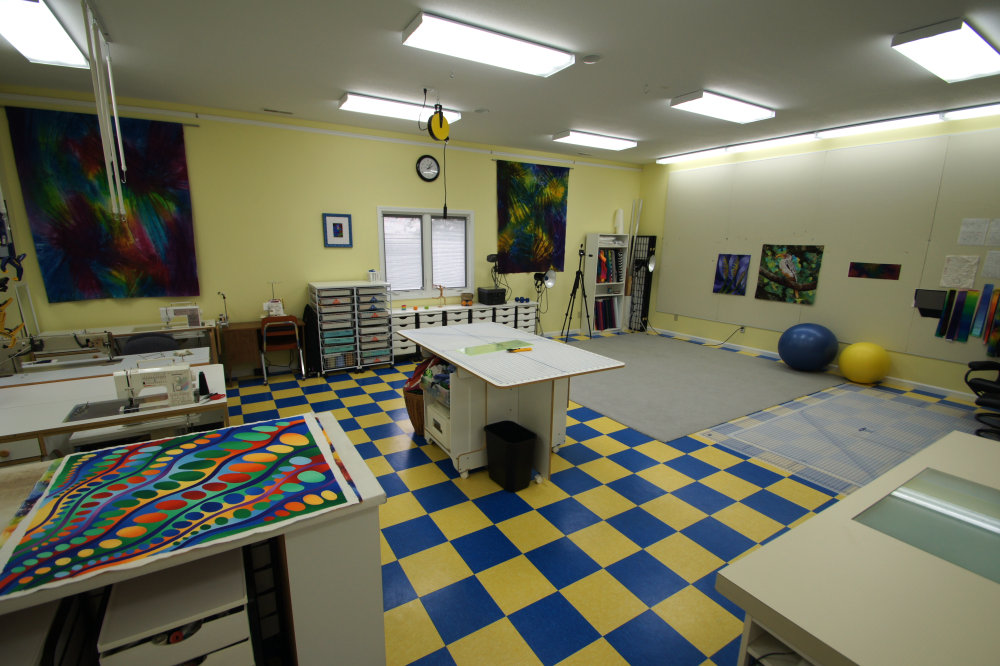
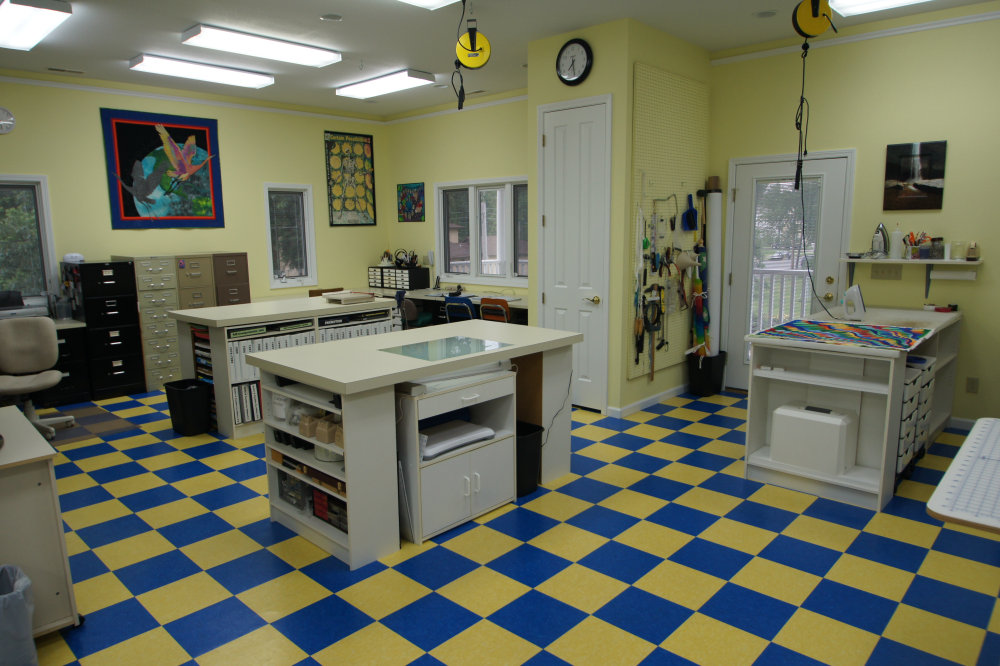
In 2005, when I built my studio/gallery/workshop center/home
in the historic LowerTown Arts District of Paducah Kentucky,
I was able to use the best features of my previous studios
and arrange them in my new space with plenty of room to move
around. I did all of my designing, publishing, and sewing in
one large room on the second floor of my building. I felt
like I was working in a tree house up here, and I had a wonderful
view of my neighborhood from my second floor perch. |
|
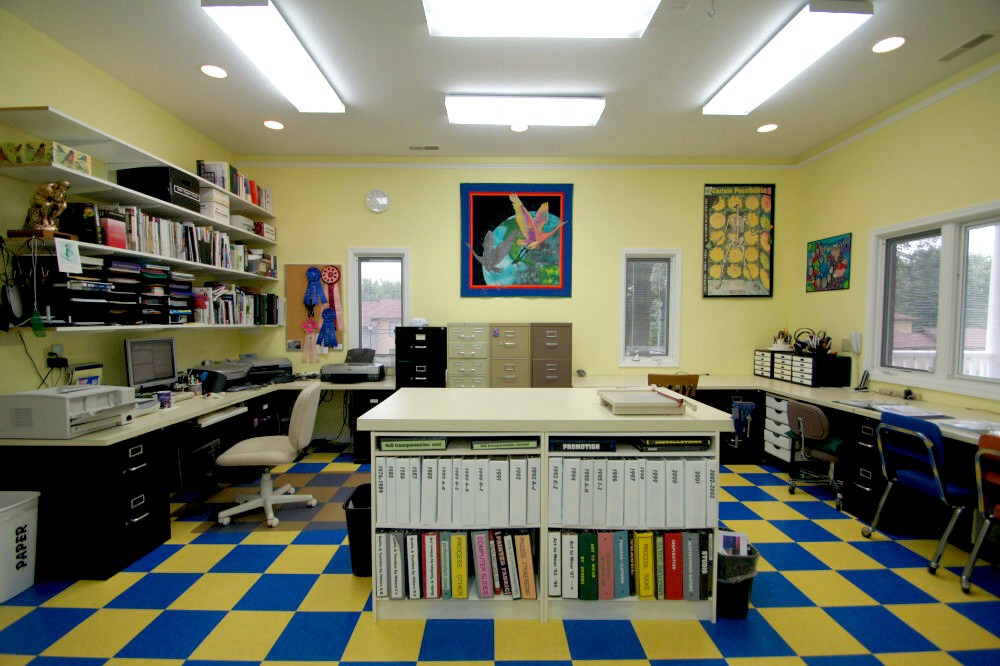
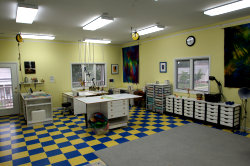
| I do all of my designing, publishing, and correspondence on
one end of the room. On the design and publishing end are wraparound
desks, with computers, printers, scanners, and files, plus photo
archives of previous work and a counter top for drawing and
layout. |
|
|
|
|
 |
|
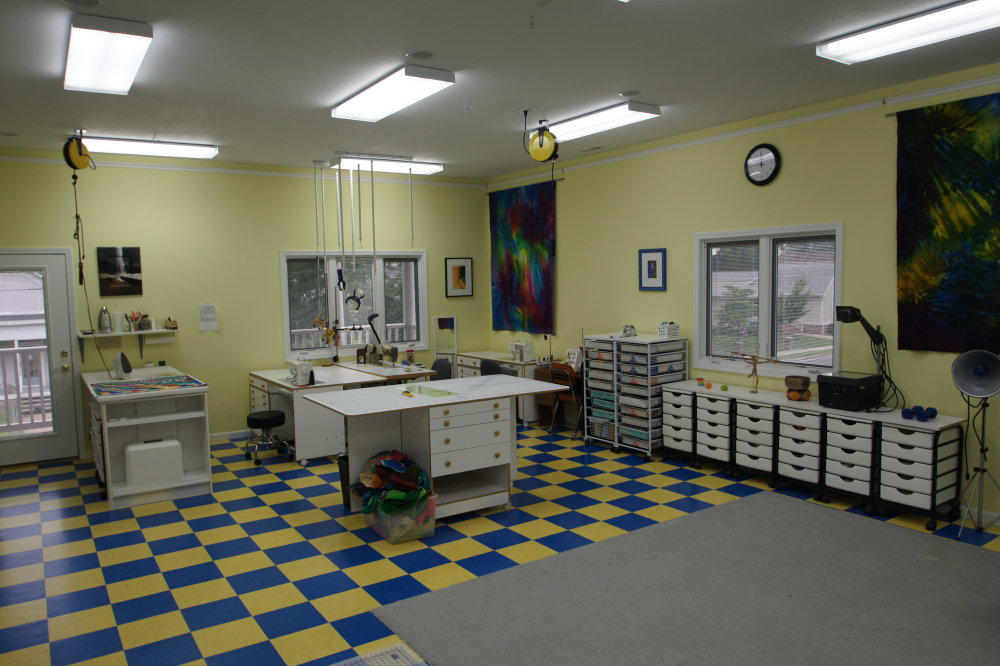
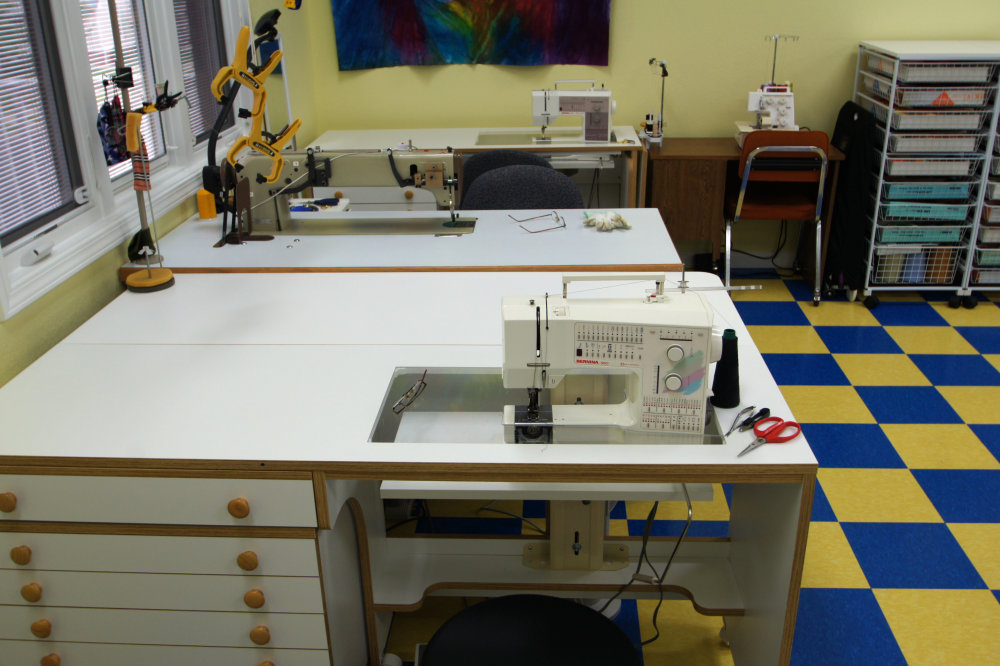
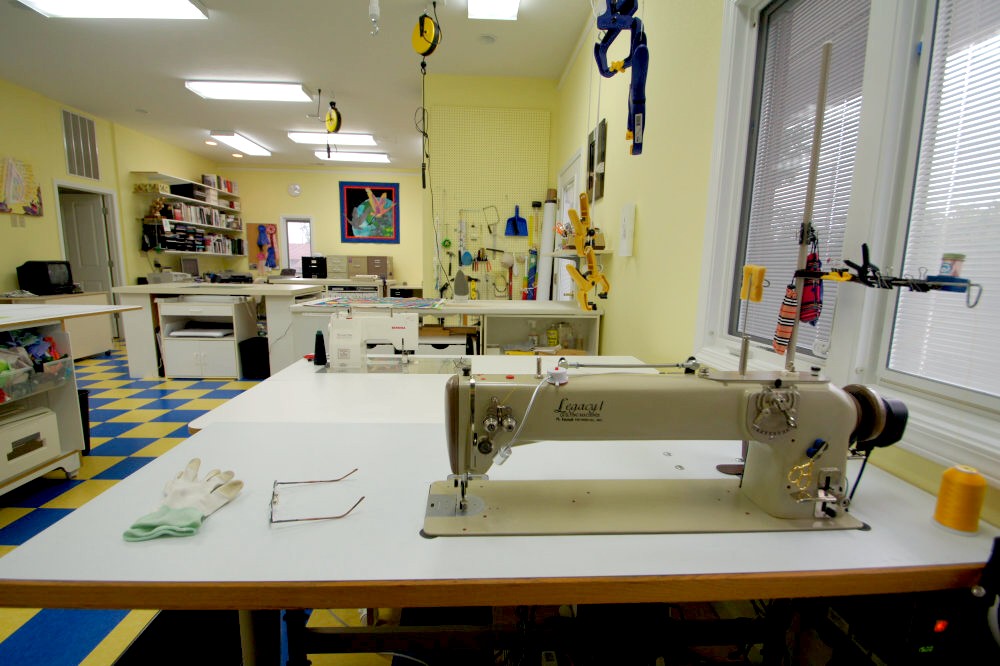
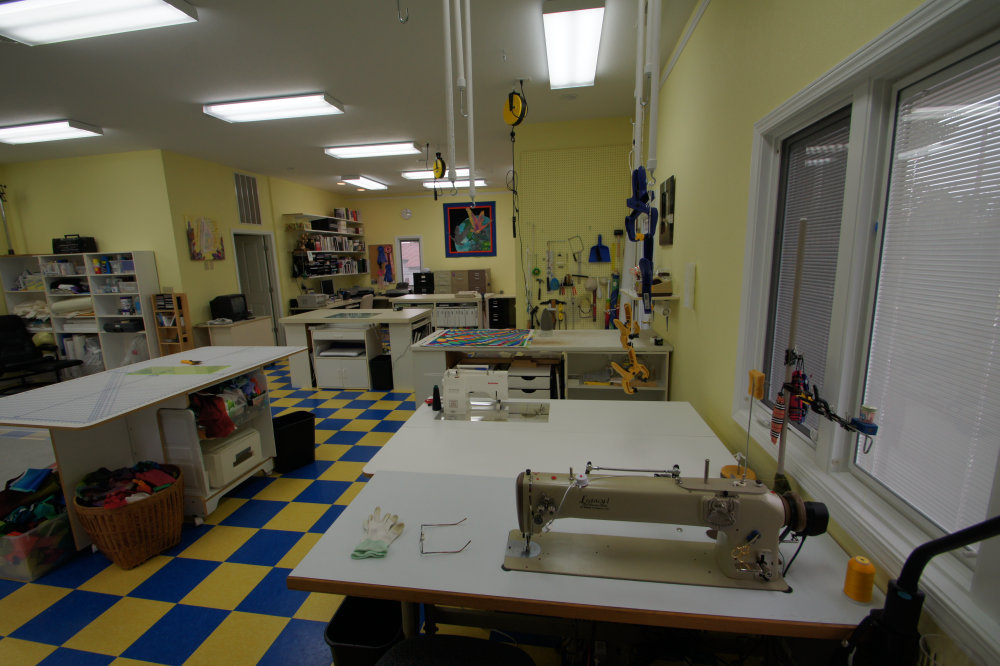
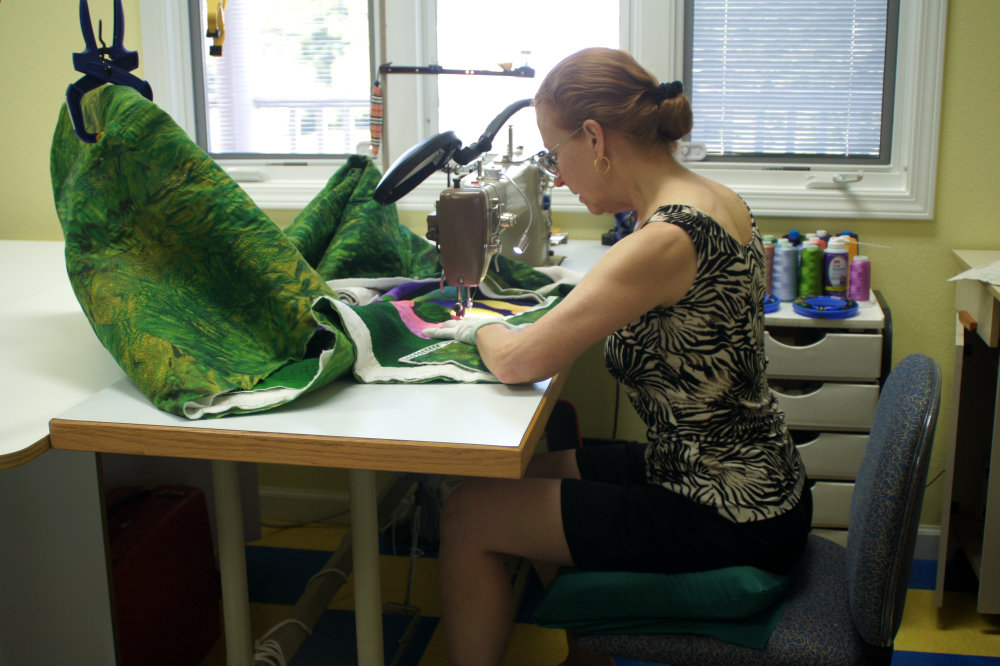
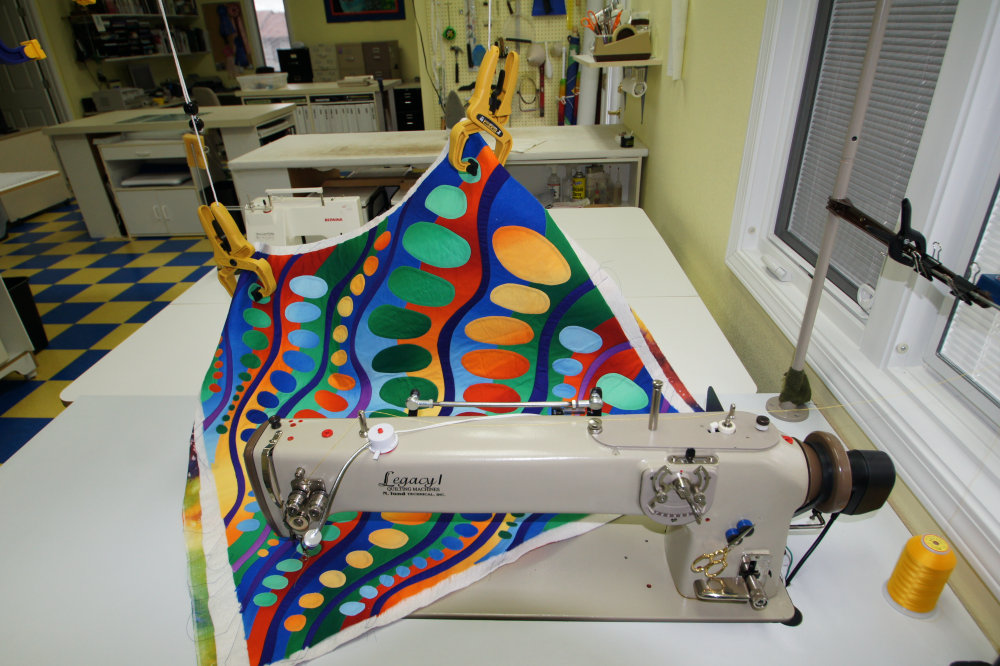
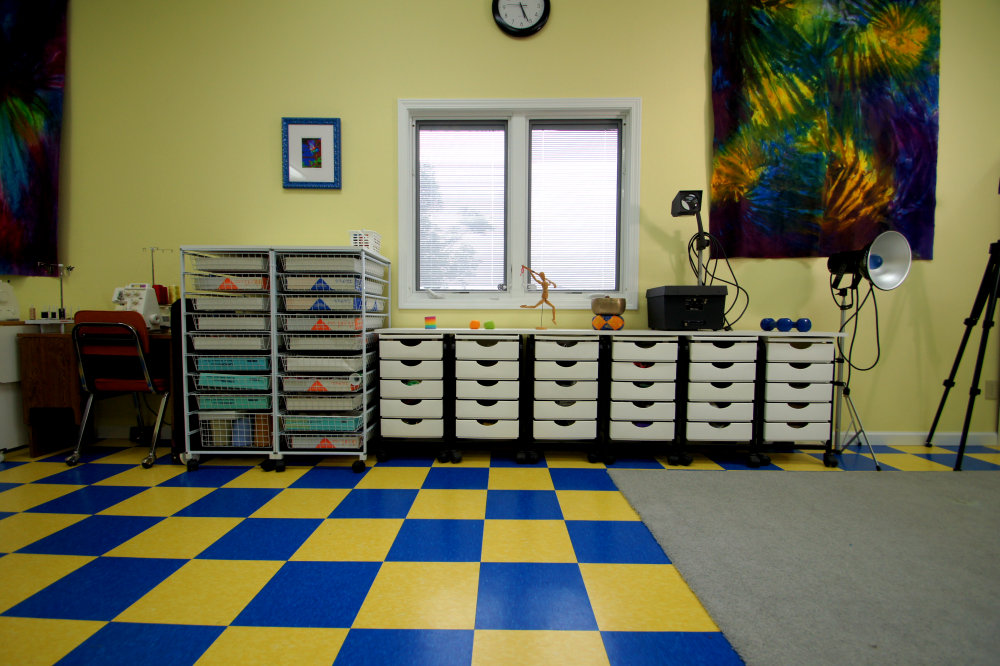
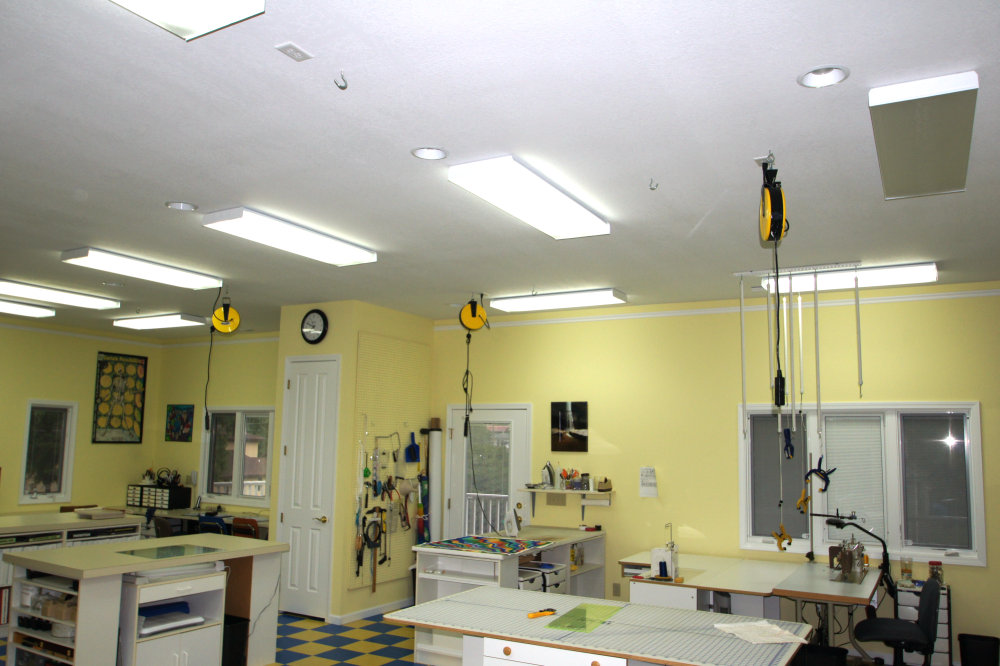
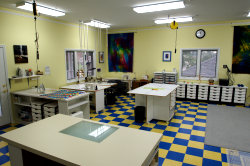
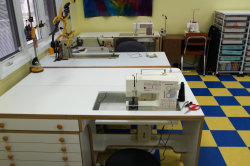
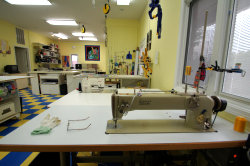
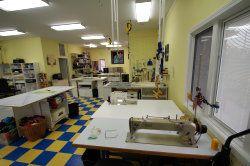
Two domestic Bernina sewing machines and a Legacy industrial machine
with 21 inches under the head for quilting are set up next to windows
for good light. |
|
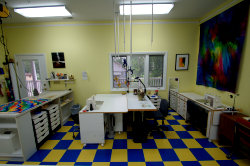
The industrial machine and one of the Berninas face each other with
a full 4 feet of tabletop space between them (needle to needle) to
support large quilts.
|
 |
 |
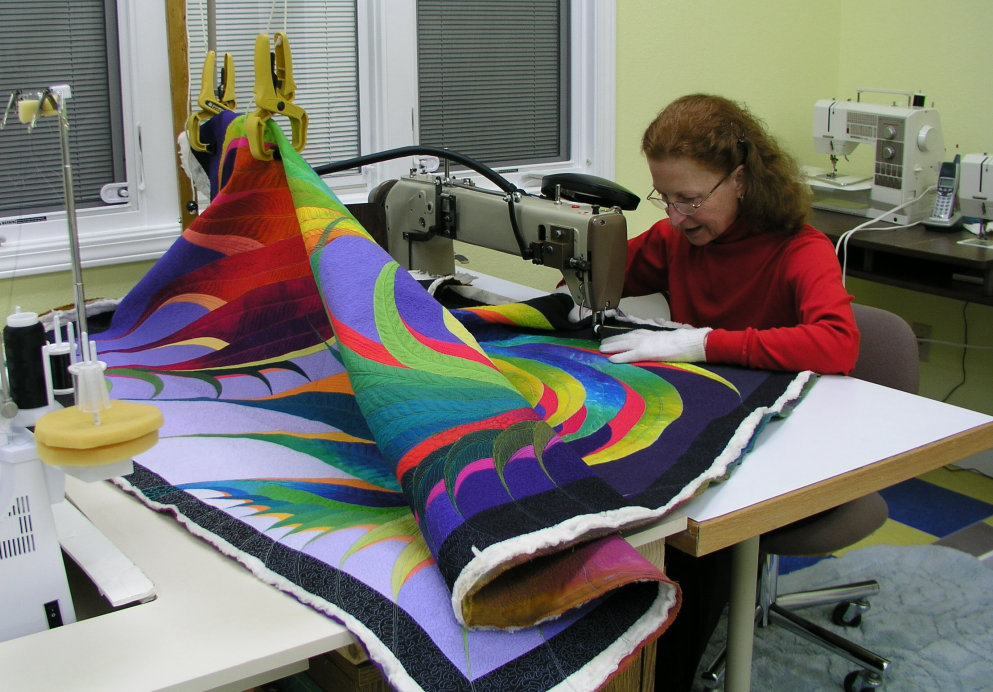
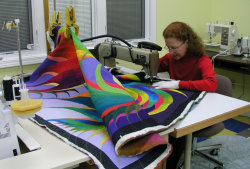
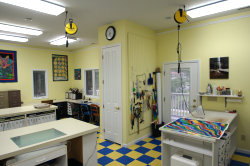
| Quick release clamps hang from the ceiling to hold the bulk and
weight of a large quilt so I can move the part I'm working on with
my fingertips. |
|
|
|
|
 |
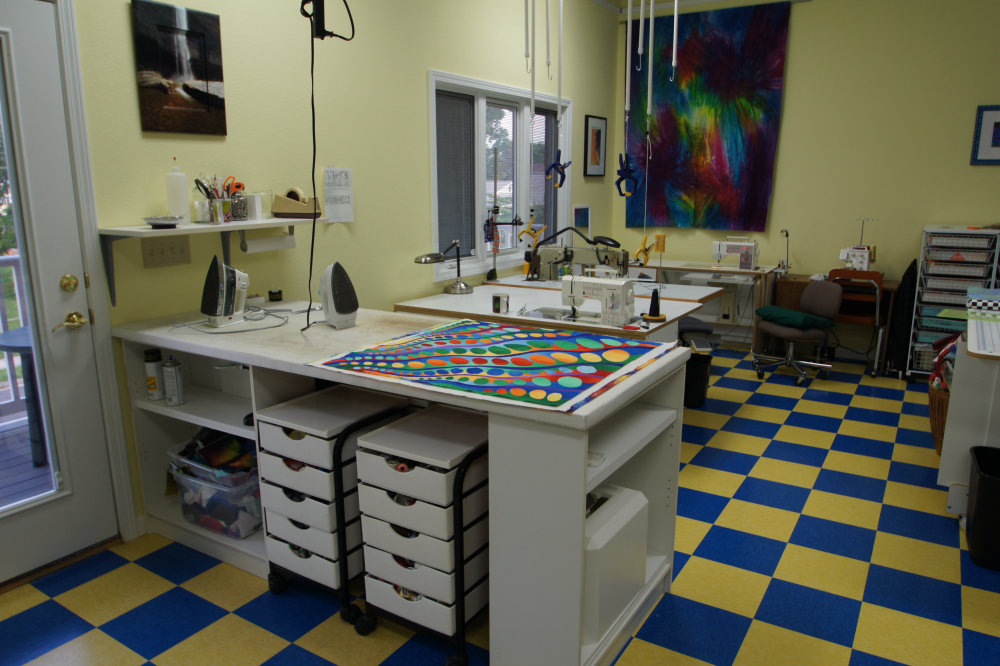
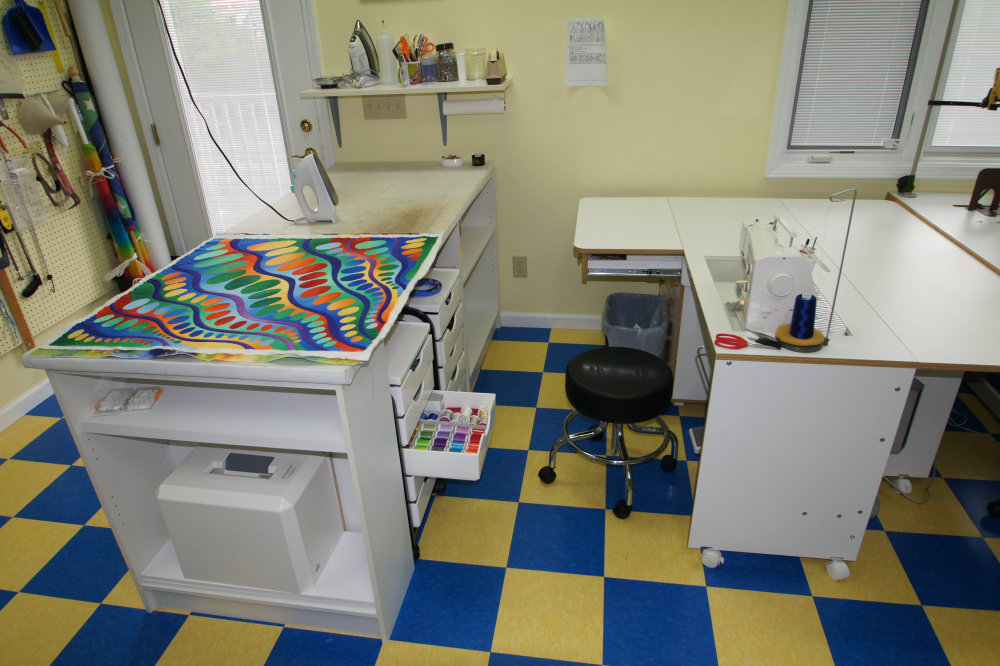
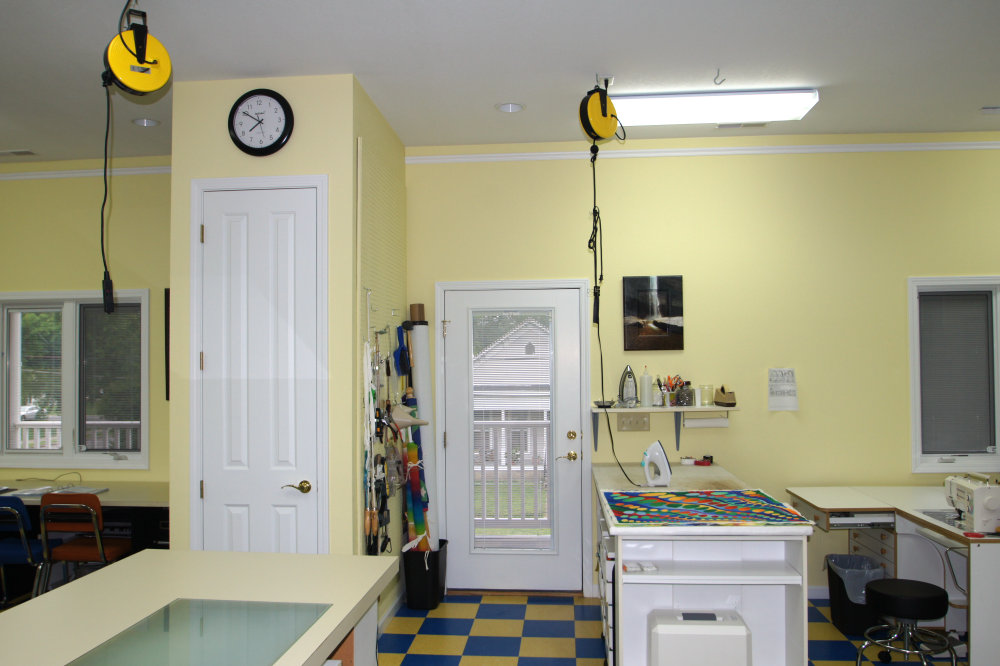
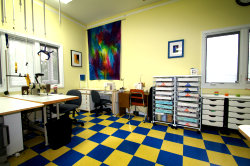
Next to the machine used for piecing is a counter-height
ironing board (below) made from a 32" x 80" hollow
core door covered with silicone fabric. Shelves support the
board, and hold ironing supplies, so the top stays relatively
clear. Beneath the board, within easy reach of my sewing chair,
are Alvin taborets (drawer stacks) that hold the notions and
threads I use for piecing.
|
|
|
 |
|
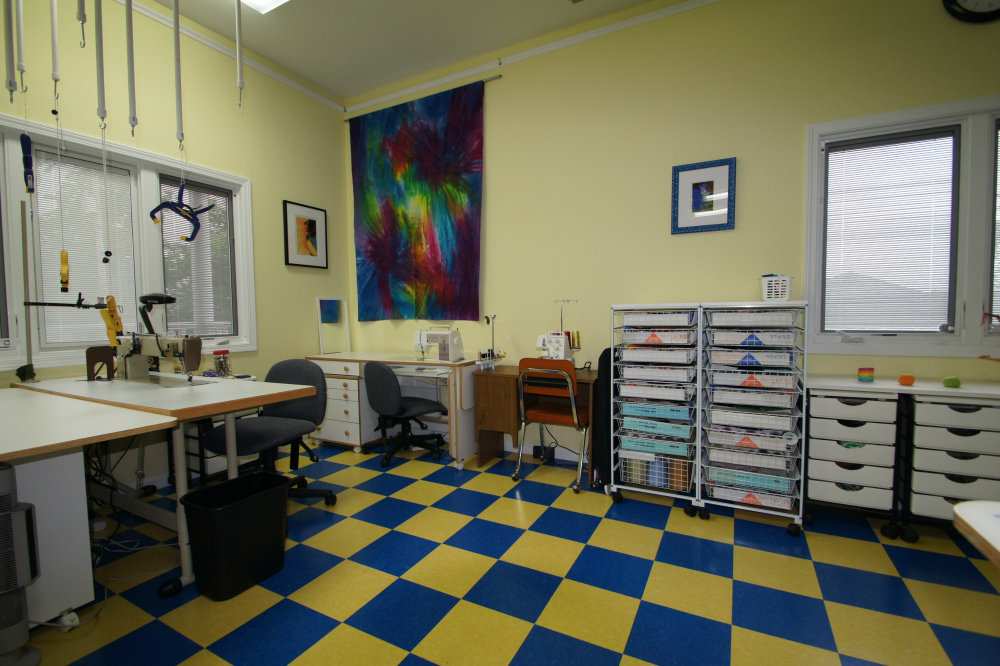
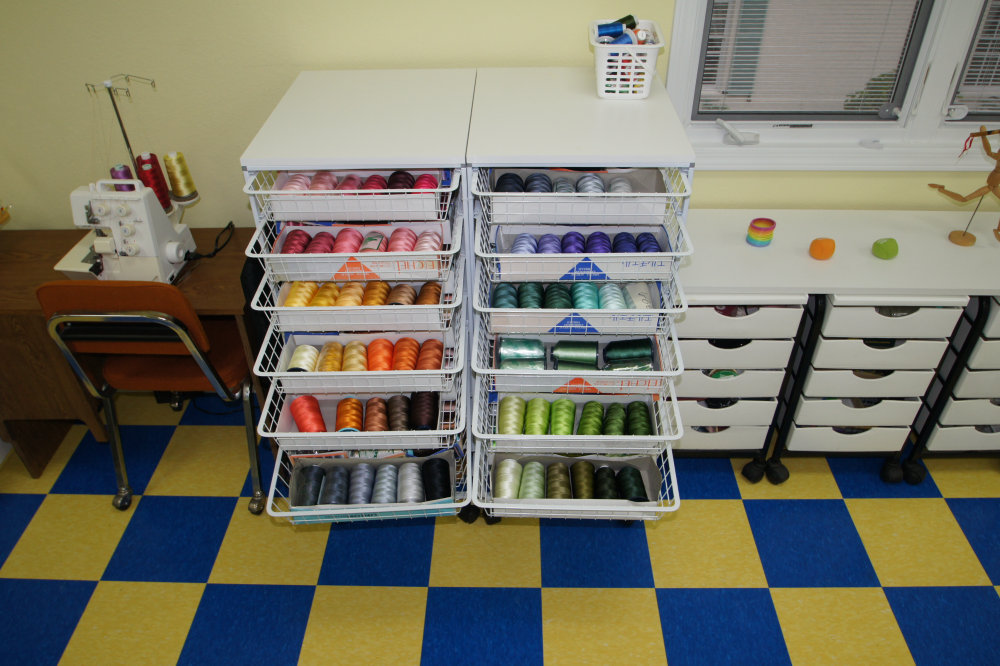
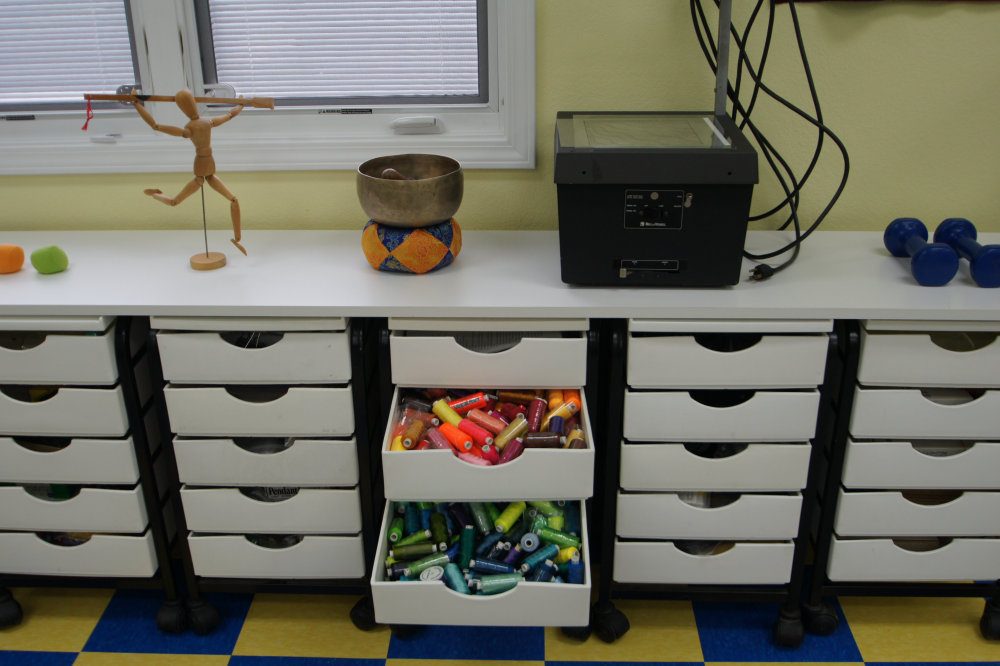
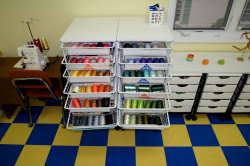
Larger Elfa drawer stacks hold cone thread near the machine used
for quilting and six Alvin taborets along the end wall hold more threads
and notions.
|
|
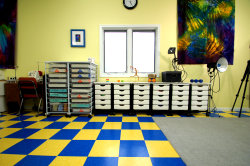 |
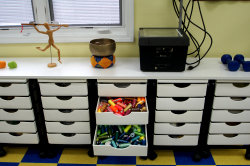
The fabrics on the wall in the pictures above and below were among
the happy surprises that happened occasionally when I was dye painting
fabrics. I couldn't bear to cut them up, so I just hung them on the
wall. |
|
|
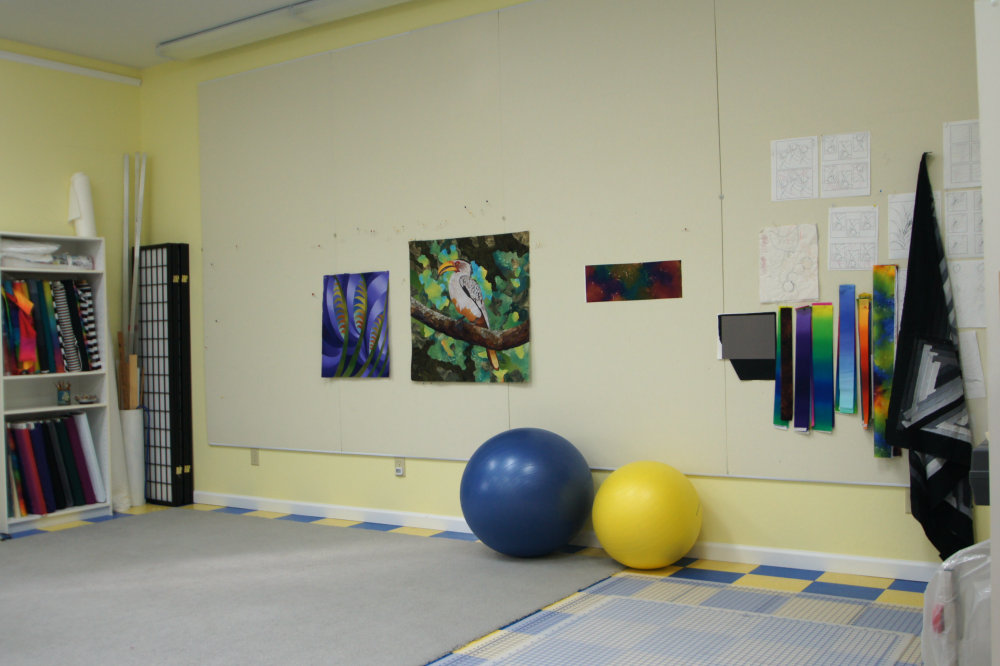
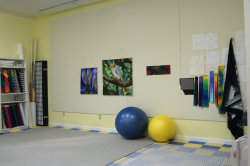
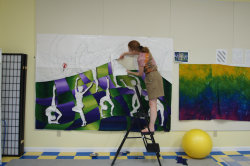
| The wall opposite the sewing machines is
my design wall, with four 4'x8' sheets of pinnable Homasote board
covered in cream-colored flannel. Homasote is that cheap (usually
under $10.00) insulation board, made of compressed sawdust, that you
can buy at the big-box home centers. You used to be able to find it
with a natural finish, but now it all seems to have a nasty black
coating of some kind. I covered my boards with unbleached muslin first,
and then covered them with a cream colored flannel. In each case I
bought 109" wide fabric which is intended for quilt backing.
You can rest your design boards on the floor, which I did in my previous
studio, but in this studio they would have covered my electrical outlets.
I bought white vinyl "J" channel in the vinyl siding department
and screwed it to the wall to hold the bottoms and tops of my boards.
In the cracks between the boards, half way between the bottom and
the top, I have screws going into the wall. Each screw has a 1"
washer slipped over the head, to hold the edges of the boards and
prevent them from bulging. This wall happens to be one of many in
the building that has a continuous layer of plywood behind the drywall,
so
I could anchor screws anywhere I wanted them. |
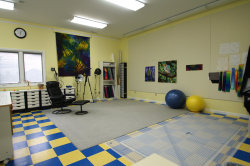 |
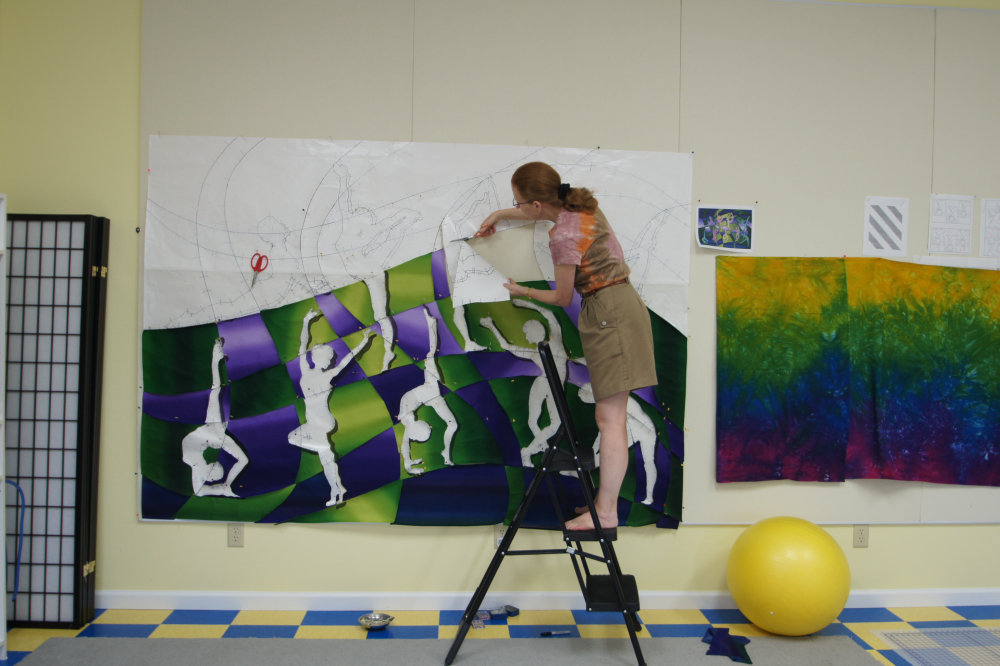
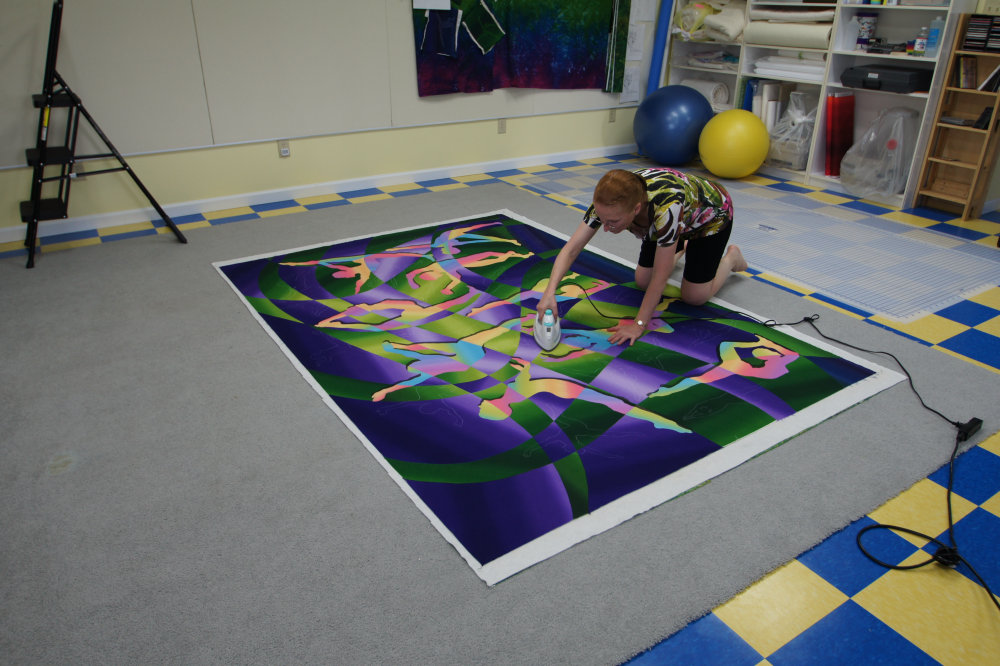
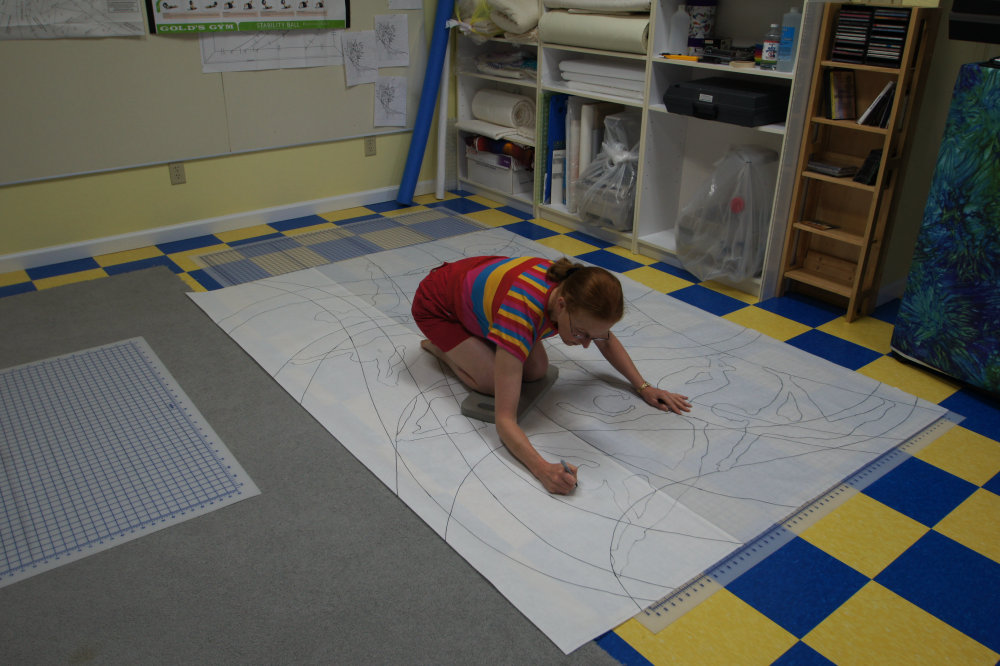
An 11' square, level-pile rug, used for blocking and as a background
for many of my workshop presentations, lies in front of the design
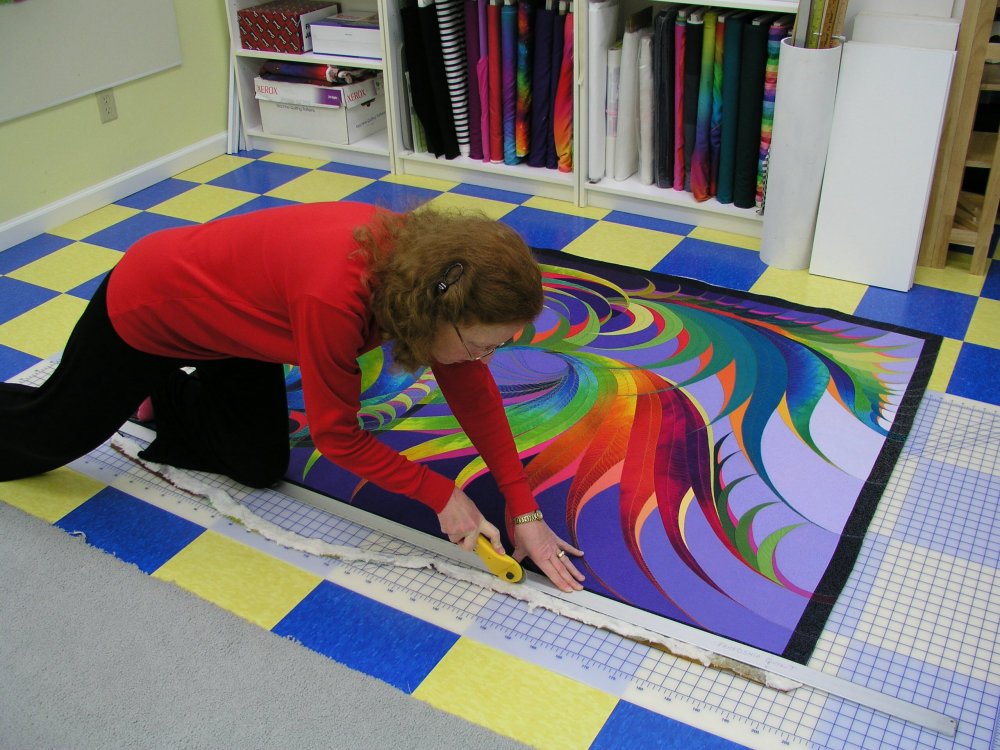
wall. I do a lot of drawing and rotary cutting
on the floor, especially when I'm squaring up a large quilt. |
|
|
 |
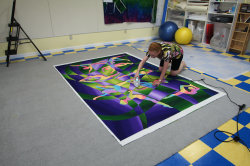
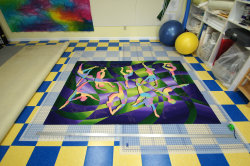
A
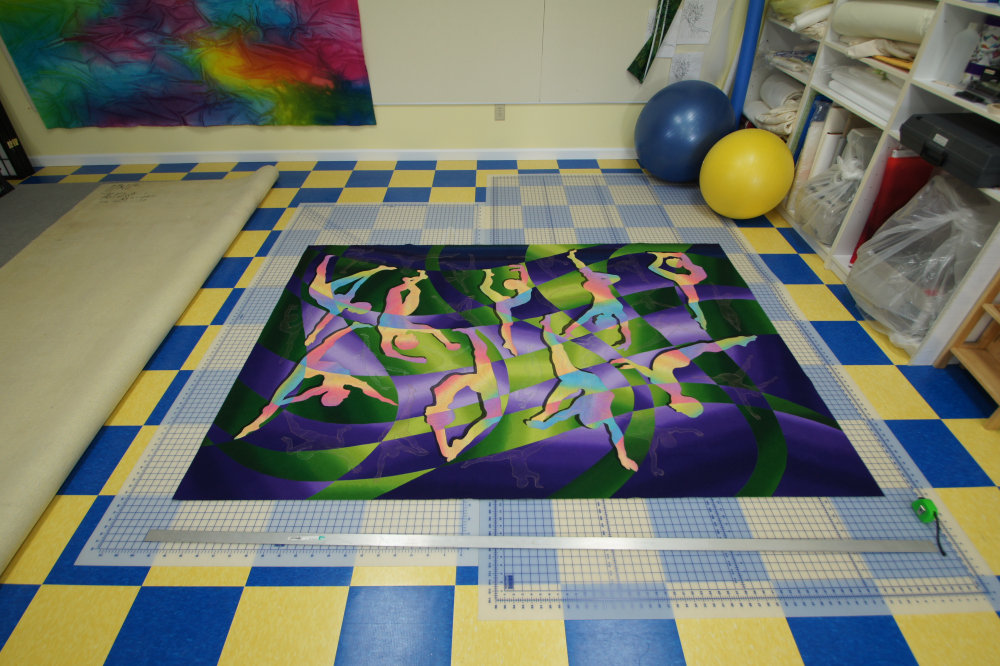
5' x 10' rotary mat from quiltersrule.com lies on the floor next to the rug. For larger quilts I roll up the
rug and use two giant mats side-by-side (below right). |
|
|
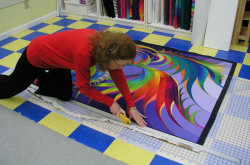 |
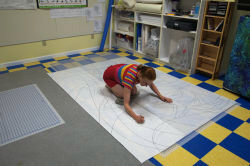
I have a low center of gravity and good knees, so I can work on
the floor. I also do Pilates three times a week to make sure I can
still get up off the floor. |
 |
|
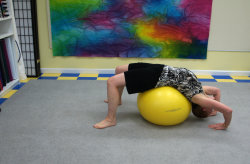 |
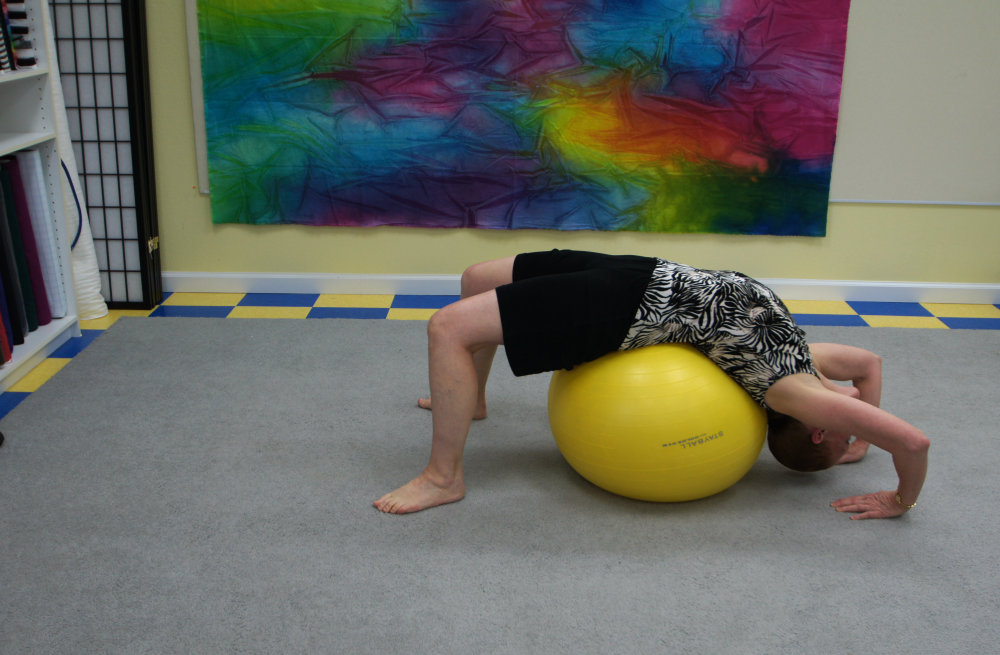
After many hours of leaning over a sewing
machine, it is easy to get a rounded back so I try to remember to stretch
out and do a back bend over a Pilates ball several times a day. This
helps strengthen the core muscles and reverses the direction of the
spine. |
|
|
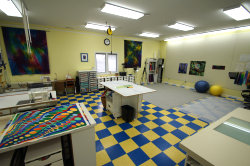 |
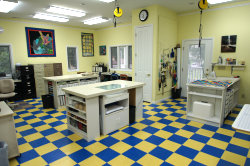
In the center of the sewing area is a 40" x 72" cutting
table (below left). A light box, used for both piecing and designing,
is built into a counter top between the publishing/design end of the
studio and the sewing end (below right). |
|
|
 |
A 3' closet with a custom 8' door holds extra 4x8 design boards.
A pegboard on the side of the closet holds tools. |
 |
 |
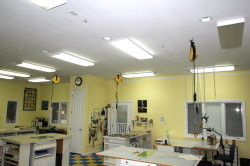
The best idea borrowed
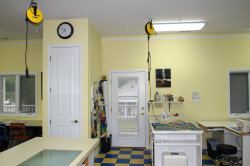
from my previous studio: ceiling outlets with 30' retractable, cord-reel
extension cords. I can have power anywhere in my workspace without
jumping over cords, and my iron cord never drags across my freshly
ironed fabric.
All of the fluorescent lighting in my studio is 6500 Kelvin,
as close to sunlight as you can buy. The bulbs are GE SP65
four foot tubes.
|
|
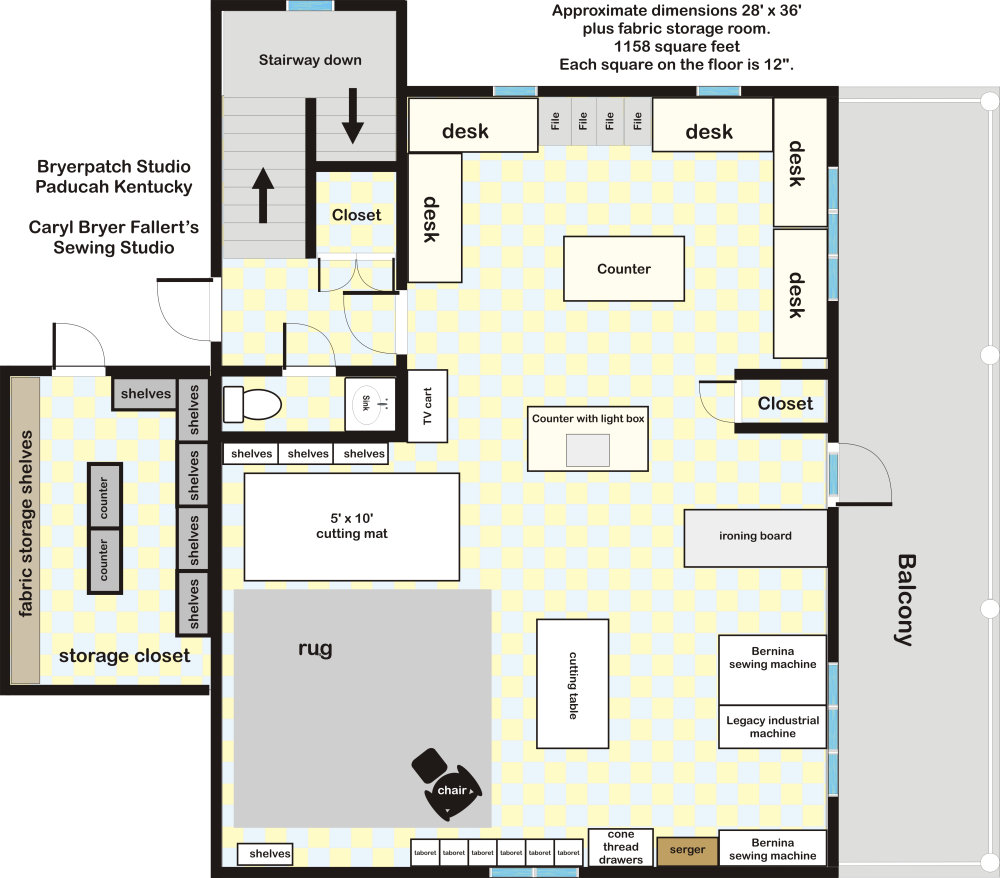
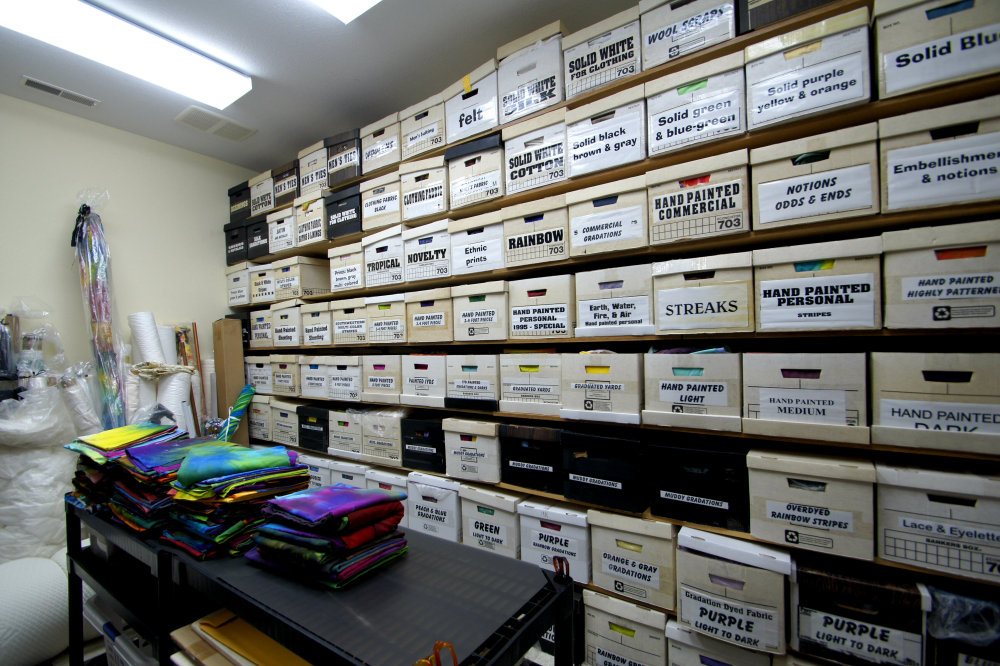
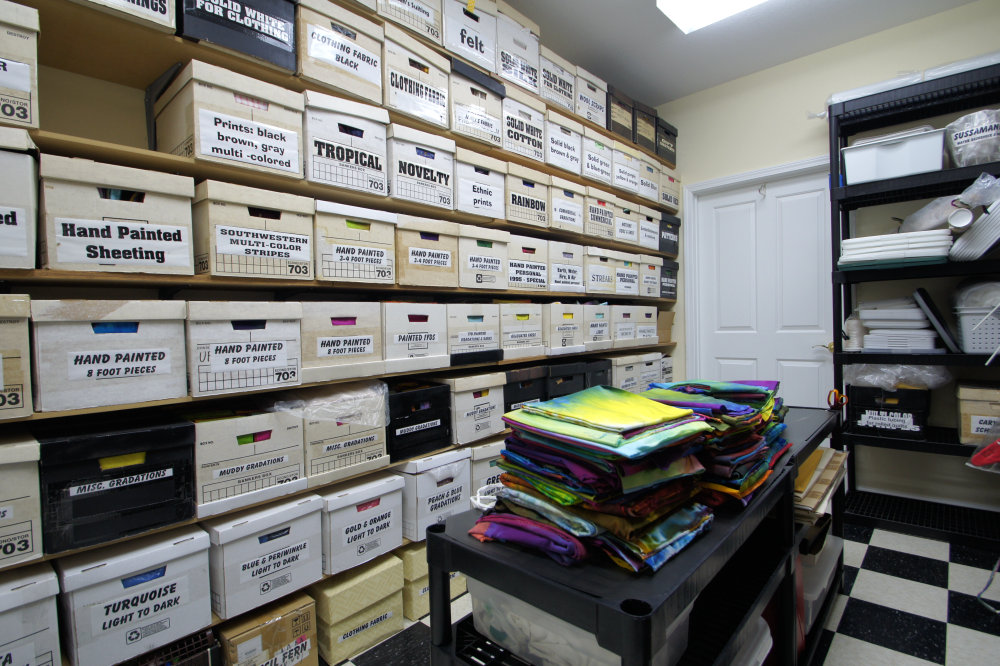
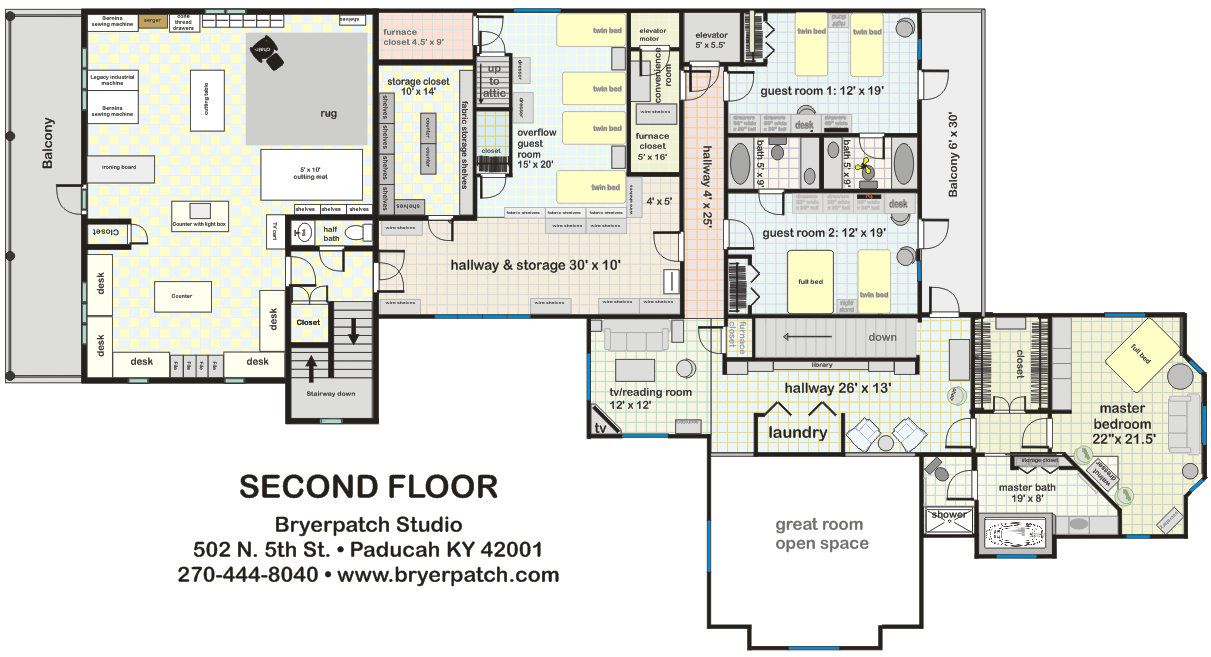
My fabrics and quilts are stored in an adjacent 9' x 14' closet.
(See diagram above)
In my previous studio, the boxes of fabric lined several walls and
they were not the most attractive feature of the room. I fantasized
about having an 8' extension on the building behind my design wall
where the fabric could be stored. |
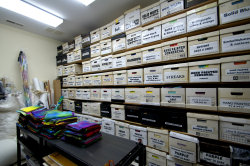 |
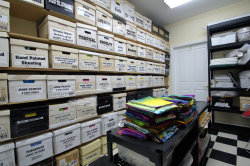
This is exactly what I built into
my new studio. This 9' x 14' closet is behind the design wall. It
has heat, air-conditioning, and color corrected work lights, but no
outside light to fade the fabrics. The quilts that are not hanging
in my gallery are also stored here. |
|
|
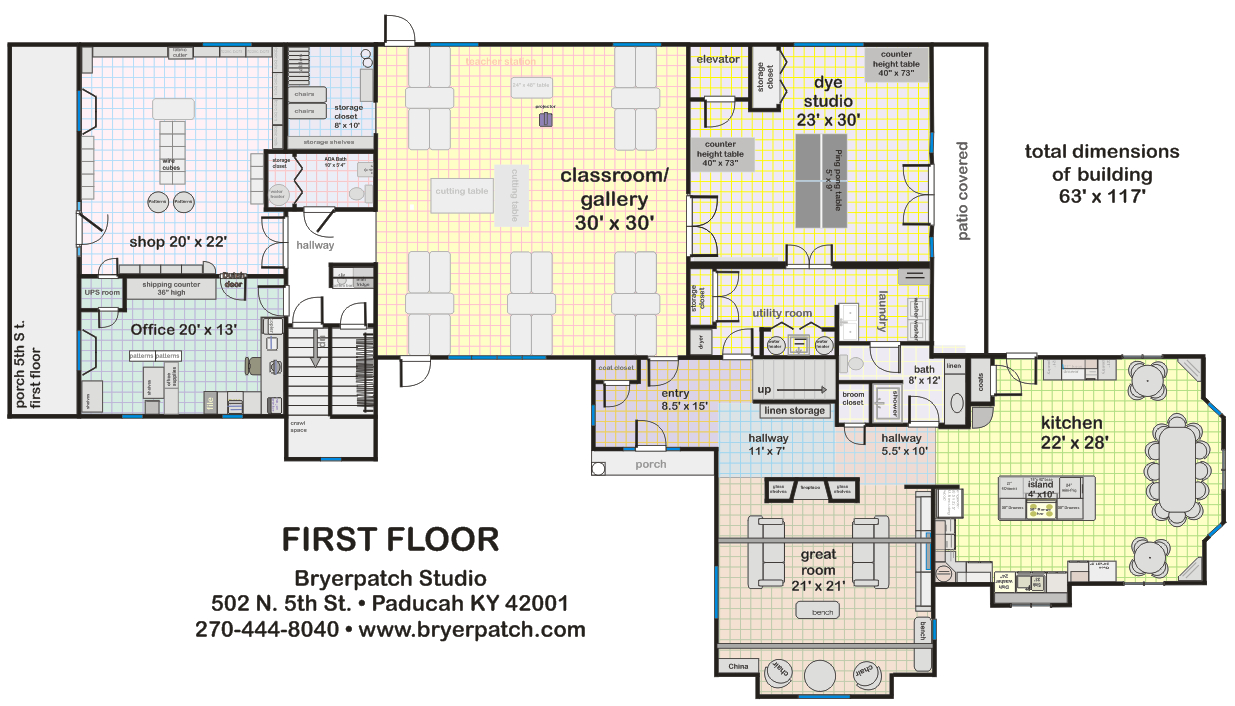
| I moved to LowerTown Arts District of Paducah under the city's Artists
Relocation Program, and one of the requirements was that artists live,
work, and sell under one roof. My building was about 8000 square feet.
(See diagrams
below) |
|
| In 2013 I sold this building to Paper Pieces, and it continues to be a center for creativity and quilting.
|